
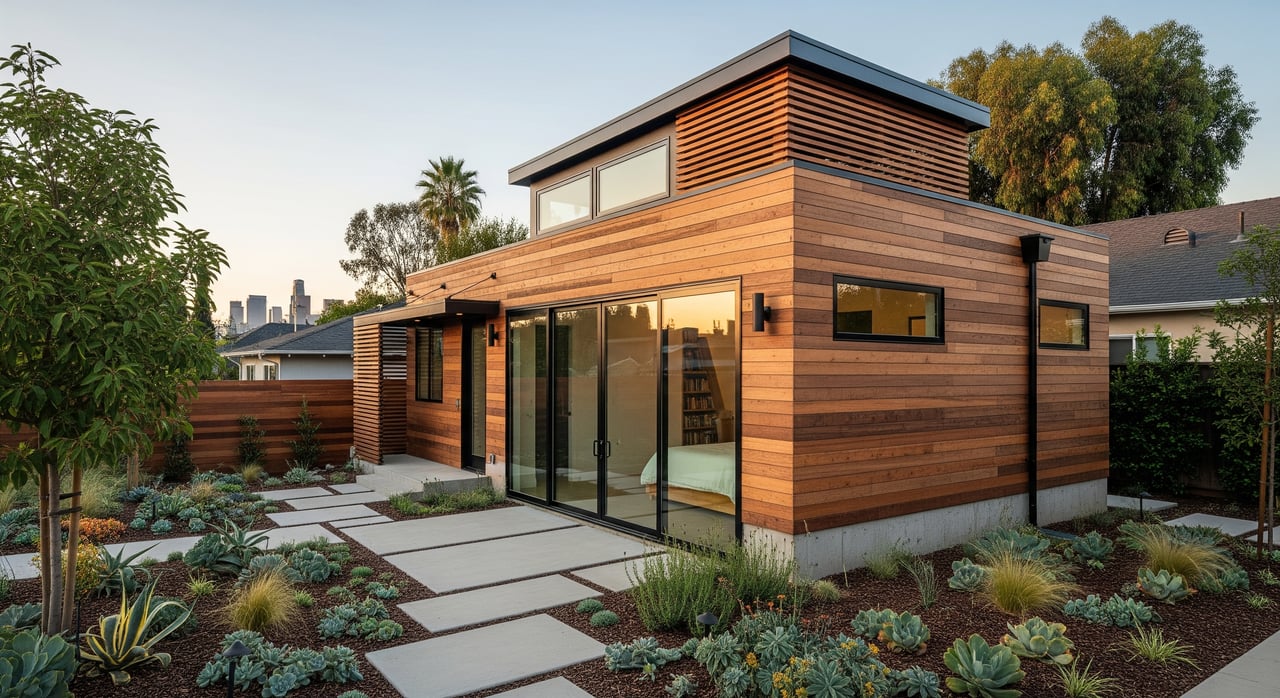
Thinking about adding an ADU to your Echo Park property but not sure where to start? You are not alone. Many owners want flexible space for family, guests, or rental income and are unsure how the rules, costs, and timelines actually work in Los Angeles. In this guide, you will get a clear overview of ADU options, what is typically allowed in Echo Park, what it may cost, and how to move from idea to approved plans. Let’s dive in.
What counts as an ADU in Echo Park
Accessory dwelling units come in a few common forms in Los Angeles:
- Detached ADU: A new, stand-alone backyard unit or a unit built above a rear garage.
- Attached ADU: An addition to your main house with a separate entrance.
- Converted ADU: A garage, basement, or existing accessory structure turned into a unit.
- Junior ADU (JADU): A compact unit, commonly up to 500 sq ft, carved out inside an existing single-family home.
State law enables ADUs on many residential lots, and Los Angeles processes compliant projects through administrative review. In Echo Park, many residentially zoned properties qualify when they meet site standards like setbacks, height, and utility needs.
Can your property qualify
California rules make ADUs broadly feasible, and the City of Los Angeles implements those standards through Building and Safety and Planning. In Echo Park, most residentially zoned lots can host an ADU if they meet basic requirements. Hillside sites and historic overlays can add steps, but they do not automatically prevent an ADU.
Expect a ministerial, checklist-style process when your plans meet the codes. The key is to confirm zoning, overlays, easements, and utilities early so your design aligns with the rules from day one.
Size, setbacks, and height
- Size: Detached ADUs in Los Angeles often range from about 300 to 1,200 sq ft, depending on zoning and lot size. JADUs are commonly limited to about 500 sq ft inside your existing home. Conversions, like garages or basements, often land in the 300 to 700 sq ft range.
- Setbacks: State law limits how strict local setbacks can be. Many detached ADUs can use reduced side and rear setbacks, often as little as 4 feet. Attached ADUs generally follow the main house setbacks.
- Height: Single-story detached ADUs often cap near 16 feet. Two-story options may reach higher in some zones, often up to the mid 20-foot range if standards are met. Hillside or constrained lots can change what is feasible.
Always verify your property’s exact standards before finalizing a design.
Parking rules in Los Angeles
Parking rules for ADUs are more flexible than many owners expect. In many cases you will not be required to replace parking if you convert an existing garage or carport into an ADU. Parking can also be reduced or waived for units near public transit or for certain unit types and sizes. Many Echo Park addresses qualify for reduced or zero new parking, especially near transit corridors.
Because parking policy evolves, confirm current requirements with the city during your feasibility review.
Historic overlays and design review
Parts of Echo Park are near or within Historic Preservation Overlay Zones. If your property sits in an HPOZ or is a designated historic resource, you may face design review for exterior changes, massing, and materials. State law supports ADUs, but design and preservation standards still apply. This can affect the look, placement, and timeline of your project.
If you are in or near a historic area, plan a consult with a designer who understands HPOZ procedures before submitting plans.
Hillside and alley considerations
Echo Park includes both flat blocks and steep hillside streets. On hillside lots, you may need geotechnical reports, grading plans, retaining walls, and additional fire-safety measures. These requirements can influence cost, height, and the construction approach.
Alley access is common in Echo Park and can be an advantage. Many owners convert a rear garage or build a unit above it. Check alley width, easements, utilities, and access for service and emergency vehicles. Over-garage designs can be efficient, but a second story may trigger additional height or setback rules.
Costs, financing, and taxes
Costs vary widely by site, scope, and finish level:
- Garage or interior conversion: often in the low six-figures, roughly 80,000 to 200,000.
- New detached ADU: commonly 150,000 to 400,000 or more for a modest 500 to 1,000 sq ft unit. Two-story or high-spec builds can exceed 300,000 to 500,000.
Financing options include cash, HELOC, construction loans, and specialized ADU lenders. The City of Los Angeles has offered programs such as fee reductions or low-interest loans at times. Check current availability before budgeting.
New ADUs may affect your property tax assessment. The ADU portion is commonly assessed as new construction, while your main home typically retains its base. Confirm the current practice with the county before you finalize costs.
Permitting and timeline in Los Angeles
Here is what the process usually looks like:
- Early feasibility: Confirm zoning, overlays, easements, and utilities. Pull maps and property records and check for HPOZ or hillside standards.
- Schematic design: Create a site plan and sketch potential layouts. Measure existing structures if converting.
- Construction documents: Prepare architectural, structural, and MEP plans. Hillside or second-story work may require engineering.
- Submittal: Apply for building permits. Compliant ADUs are reviewed administratively.
- Plan check and corrections: Expect revisions and resubmittals.
- Permits and inspections: Construction proceeds with inspections at key stages.
- Final sign-off: Receive final inspection or a certificate of occupancy.
Timelines vary by scope:
- Simple garage or interior conversion: about 3 to 6 months from design through completion.
- New detached ADU: about 6 to 18 months or more, depending on site complexity and the permit queue.
Historic review, grading, geotechnical work, and complex plan checks tend to add time. Some city programs and plan resources can speed approvals, so ask what is available when you begin.
Echo Park ADU scenarios
- Rear garage conversion with or without a unit above: This is common where lots have alley access. You can use the existing footprint, which may reduce new foundations and driveway impacts.
- New detached backyard cottage on a narrow lot: With careful placement and reduced rear and side setbacks, a 400 to 1,000 sq ft unit can often fit.
- Junior ADU inside your home: For speed and cost control, a JADU, commonly up to 500 sq ft, can create flexible space with minimal exterior changes.
Each scenario has different cost, design, and utility implications. Early planning helps you pick the right path.
Who to hire and when
- Architect or ADU designer: Engage early to map feasibility, overlays, and design options.
- Surveyor: Bring one in if property lines or easements are unclear. Setbacks depend on accurate boundaries.
- Structural engineer: Needed for second stories, major conversions, and new structures.
- Geotechnical or civil engineer: Important for hillside lots or grading.
- Permitting expeditor or experienced contractor: Useful for navigating LA plan check and inspections.
- HOA review or legal consult: If your property has CC&Rs, check them early. State law affects HOA limits on ADUs, but rules still matter.
Quick start checklist
- Pull zoning and parcel data and identify overlays.
- Confirm alley access, widths, easements, and utility locations.
- Order a boundary survey if setbacks are uncertain.
- Assess HPOZ or conservation status and note any likely design constraints.
- Meet an ADU designer or architect for a feasibility sketch and budget.
- Ask the city about current ADU incentives or pre-approved plan options.
- Review financing and check potential tax impacts with the county.
- Review any HOA covenants before you commit to a design.
Avoid common surprises
- Parking and owner-occupancy rules shift over time. Verify the latest city practice before you design around assumptions.
- City incentives can be seasonal or pilot-based. Confirm what is active and budget without them as a baseline.
- HPOZ design standards can shape massing and materials and can extend timelines. Plan for review time.
- Zoning interpretations on nonconforming lots and what counts as existing floor area can change outcomes. Professional guidance reduces risk.
Ready to explore your ADU
If you are weighing an ADU to enhance flexibility, support multigenerational living, or add rental income, you should start with a focused feasibility check. A brief review of your lot, overlays, and utilities can save months and thousands of dollars. When you are ready for a thoughtful next step, connect with Michael Fenton for a confidential conversation about your property and goals.
FAQs
What is an ADU in Los Angeles and Echo Park?
- An ADU is a secondary home on a residential lot, such as a detached backyard unit, an attached addition with its own entrance, a garage or basement conversion, or a compact junior ADU inside the main house.
How big can an ADU be in Echo Park?
- Detached ADUs commonly range from about 300 to 1,200 sq ft, while JADUs are commonly up to 500 sq ft; exact allowances depend on zoning, setbacks, and site conditions.
Do I need to add parking for an ADU?
- Often no, especially if you convert an existing garage or are near transit; many Echo Park properties qualify for reduced or zero new parking, subject to current city rules.
How long does it take to build an ADU?
- Simple conversions often take about 3 to 6 months from design through completion, while new detached ADUs commonly run about 6 to 18 months or more depending on complexity.
Will a historic overlay stop my ADU?
- Not usually; state law supports ADUs, but HPOZ areas require design review for exterior changes, which can affect materials, massing, and timeline.
What does an Echo Park ADU cost?
- Garage or interior conversions often run roughly 80,000 to 200,000, and new detached units commonly range from about 150,000 to 400,000 or more based on size, site, and finishes.
Who should I hire first for an ADU project?
- Start with an ADU-savvy architect or designer for a feasibility review, then add engineering, surveying, and permitting support based on your site and scope.