
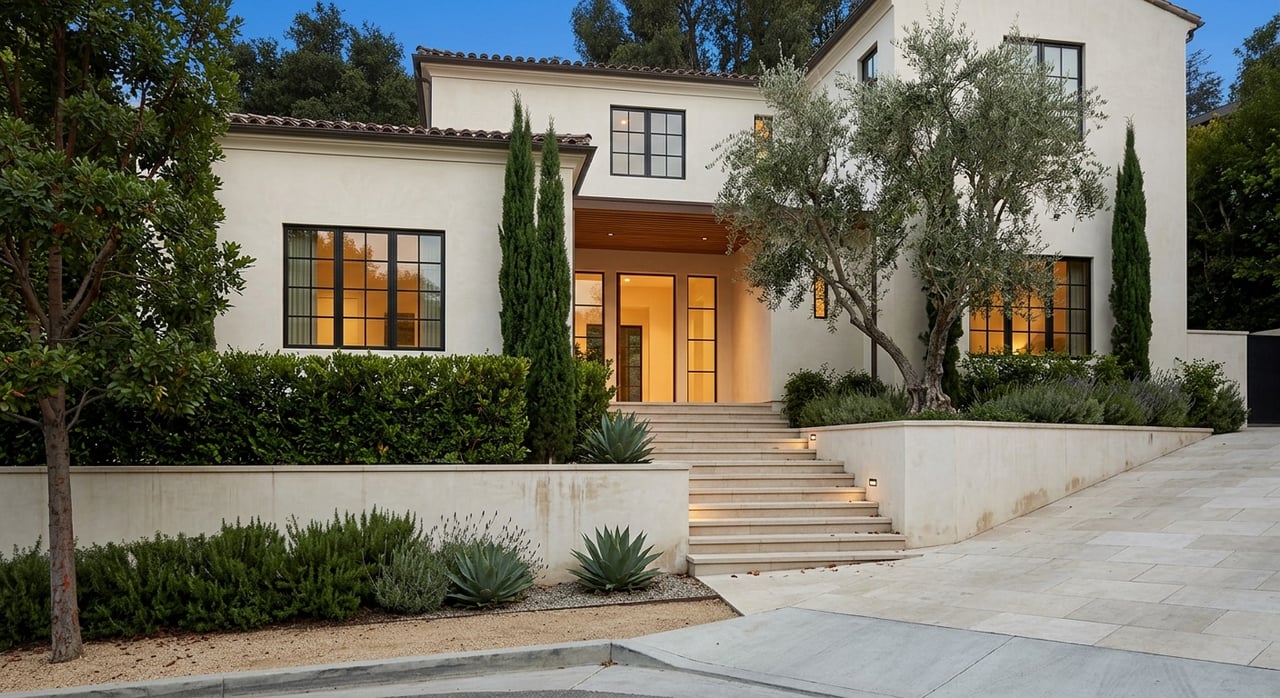
If you are choosing between Beverly Hills flats and hillside estates, you are not just comparing addresses. You are comparing two very different ownership experiences shaped by land, lot patterns, privacy, and city rules. Understanding that difference can help you buy with more confidence or position a home more effectively when it is time to sell. Let’s dive in.
How Beverly Hills Defines Flats and Hillsides
Beverly Hills itself draws a clear distinction between the city’s flatter central areas and the hillside terrain north of Sunset Boulevard. In city planning language, the Central Area covers the more level parts of the city, while the Hillside Area refers to the terrain that rises into the Santa Monica Mountains.
In everyday real estate terms, people often call the relatively flat land south of Sunset Boulevard “the flats.” City materials support that distinction. The hills north of Sunset are described as rugged terrain with steep sides, ridges, and ravines, while the flats are relatively level and gently slope southward.
That geography shapes nearly everything about daily life. It affects density, lot layout, development rules, privacy, access, and even the way a home presents from the street.
Flats Living in Beverly Hills
The flats tend to feel more connected to the city’s daily rhythm. That comes from a more regular street grid, smaller lots compared with the hills, and closer proximity to the city’s core services, shopping, dining, and cultural amenities.
City planning documents also show a strong density gradient. North of Sunset is the lowest-density residential band, while the areas south of Sunset and especially south of Santa Monica Boulevard allow smaller lots and higher density patterns.
For you as a buyer or seller, that often translates into a more street-oriented experience. In the flats, frontage, curb appeal, garden presentation, and how a home meets the street can matter a great deal.
What the Flats Often Offer
Because the land is flatter, the flats often support easier day-to-day use. While every property is different, flatter terrain generally makes it simpler to enjoy:
- more usable yard space
- straightforward patios and pool layouts
- easier garage access
- more practical guest parking
- more convenient walking routes
- simpler gardening and outdoor entertaining
That does not mean every flat property is the same. It means level land tends to reward buyers who want usability and a smoother daily routine.
Lot Patterns and Design in the Flats
In the Central Area, lot dimensions are tied closely to the existing block pattern. The code states that an R-1 lot’s width and depth cannot exceed the average width and depth of lots on the same block, and city lot rules describe central-zone lots as having at least 90 feet of frontage and at least 13,000 square feet of area.
The city’s single-family style guide also reflects a more regular, street-facing lot pattern. It highlights many of the architectural styles associated with Beverly Hills, including New England Revival, English Cottage, Tudor, French Mission Revival, Monterey, Moderne, and International styles.
The city says this guide was created to help preserve neighborhood character, encourage quality materials and landscaping, and support property values. For owners in the flats, that means presentation and architectural fit can be especially important.
Remodeling and Review in the Flats
If you own in the Central Area, visible exterior changes are subject to city design review. That matters if you are planning a renovation, updating the front elevation, or repositioning a property for sale.
From a seller’s perspective, homes in the flats are often best presented through a combination of strong frontage, thoughtful landscaping, and improvements that feel consistent with the surrounding streetscape. Buyers, meanwhile, should pay attention to how a home’s design sits within the block, not just the interior square footage.
Hillside Living in Beverly Hills
Hillside estates offer a very different proposition. In the hills, buyers are often drawn by elevation, privacy, and the possibility of expansive views rather than a traditional street-facing lifestyle.
City materials describe the hillside area as rugged and topographically complex. That terrain naturally creates more separation between properties, and the city’s hillside rules reinforce a more site-specific approach to development.
If the flats are about convenience and everyday ease, the hills are often about siting, outlook, and seclusion. Neither is universally better. They simply serve different priorities.
What the Hills Often Offer
Hillside living typically rewards buyers who value privacy and dramatic positioning. Because lots are more topographically separated and building envelopes rely on deeper setbacks and land-sensitive siting, privacy is often stronger in the hills than in the flats.
The hillside code is also explicitly view-preservation oriented. That makes view corridors and the way a house sits on its pad especially important when you are evaluating a hillside property.
For many buyers, the appeal comes down to a few defining qualities:
- stronger separation from neighboring homes
- elevated siting
- view potential
- a quieter, more secluded feel
- architecture shaped by the land itself
Hillside Rules Are More Site-Specific
The Hillside Area has development standards that respond directly to the terrain. Rear setbacks equal 15 percent of lot depth or 20 feet, side setbacks are 10 feet or 12 percent of lot width, and accessory buildings are generally set back 100 feet from the front lot line.
There are also limits on off-level-pad construction. Without a Hillside R-1 permit, off-level-pad construction is capped at 1,000 square feet. Hillside rules also include landform alteration and view-preservation standards.
Unlike the Central Area, the Hillside Area does not use the same design review process for visible exterior changes. Instead, it relies on hillside-specific development standards.
For you, this means a hillside purchase often calls for close attention to grading history, pad placement, view relationships, and any prior permitting. For sellers, those same details can become central to how the property is positioned.
Daily Life: Convenience Versus Seclusion
One of the clearest differences between Beverly Hills flats and hillside estates is how each area feels in everyday use. In the flats, life often feels more connected to the city’s active core and more convenient for routine movement in and out of the property.
In the hills, ownership can feel more removed and more private. That can be a major advantage if you value separation and a stronger sense of retreat.
There is also a practical side to this choice. The city identifies the area north of Sunset Boulevard and a few blocks south as a Very High Fire Hazard Severity Zone, which means hillside ownership can involve brush clearance and evacuation preparedness.
That does not make hillside living less desirable. It simply means the ownership experience includes responsibilities that are less central in the flats, where city materials describe minimal to no wildland fire exposure.
Which Setting Fits Your Priorities?
The better choice depends on what you want your home to do for you. A buyer focused on daily usability, level land, and a more walkable rhythm may naturally lean toward the flats.
A buyer focused on privacy, protected views, and dramatic siting may feel more aligned with the hills. In Beverly Hills, the value of a property is often tied as much to lifestyle fit as it is to size or price.
Beverly Hills Flats Versus Hillsides at a Glance
| Priority | Flats | Hillside Estates |
|---|---|---|
| Terrain | Relatively flat | Steep, rugged, varied |
| Feel | More connected to city life | More separated and secluded |
| Lot pattern | More regular and street-facing | More site-specific and land-driven |
| Daily use | Easier outdoor usability and access | More privacy and view potential |
| Key seller strengths | Frontage, curb appeal, gardens, design fit | Views, pad siting, grading and permit history |
| Ownership considerations | Design review for visible exterior changes | Hillside standards, view rules, fire-zone readiness |
What Buyers Should Look For
If you are buying in the flats, focus on the quality of the lot, the home’s relationship to the street, and how any renovation fits the Central Area context. Because the area is more public-facing, curb appeal and exterior coherence can carry real weight.
If you are buying in the hills, spend extra time on the site itself. Look closely at how the home is positioned on the pad, what view corridors are being protected, and whether the property’s grading and built form align with hillside regulations.
In both cases, the most important question is simple: does the property match the way you actually want to live? In Beverly Hills, that answer often matters more than broad assumptions about which area is more prestigious.
What Sellers Should Emphasize
If you are selling a home in the flats, your strongest story is often about livability and presence. Buyers may respond to frontage, landscape design, garden quality, and updates that respect Beverly Hills’ established architectural character.
If you are selling in the hills, the story shifts. View corridors, privacy, topographic siting, and permit or grading history can become far more important to a buyer’s decision-making.
That is where thoughtful positioning matters. A hillside estate and a flat-lot residence may both be exceptional, but they should not be marketed the same way because buyers are usually responding to different forms of value.
Beverly Hills does not offer a one-size-fits-all answer here. The flats and the hills each reward a different kind of ownership experience, and the best decision comes from understanding how the land, the rules, and your priorities all intersect.
If you are weighing a purchase or preparing to sell an estate in Beverly Hills, Michael Fenton offers discreet, locally grounded guidance shaped by the nuances of each property and each setting.
FAQs
What is the difference between Beverly Hills flats and hillsides?
- The flats generally refer to the relatively flat land south of Sunset Boulevard, while the Hillside Area is the terrain north of Sunset that rises into the Santa Monica Mountains.
Are Beverly Hills hillside homes more private than homes in the flats?
- Often, yes. The hills usually provide more topographic separation, deeper setback patterns, and a more secluded feel than the flatter, more street-facing areas.
Do Beverly Hills flats have easier day-to-day living?
- In many cases, yes. Flatter terrain often makes walking, parking, gardening, patios, pools, and general outdoor use more straightforward.
Are Beverly Hills hillside properties subject to different rules?
- Yes. Hillside properties follow hillside-specific development standards related to setbacks, landform alteration, view preservation, and certain limits on off-level-pad construction.
Do homes in Beverly Hills flats go through design review?
- Yes. In the Central Area, visible exterior changes are subject to city design review.
What should sellers highlight in Beverly Hills flats versus hillside estates?
- In the flats, sellers should usually emphasize frontage, curb appeal, gardens, and architectural fit. In the hills, sellers should usually emphasize views, privacy, pad siting, and grading or permit history.