
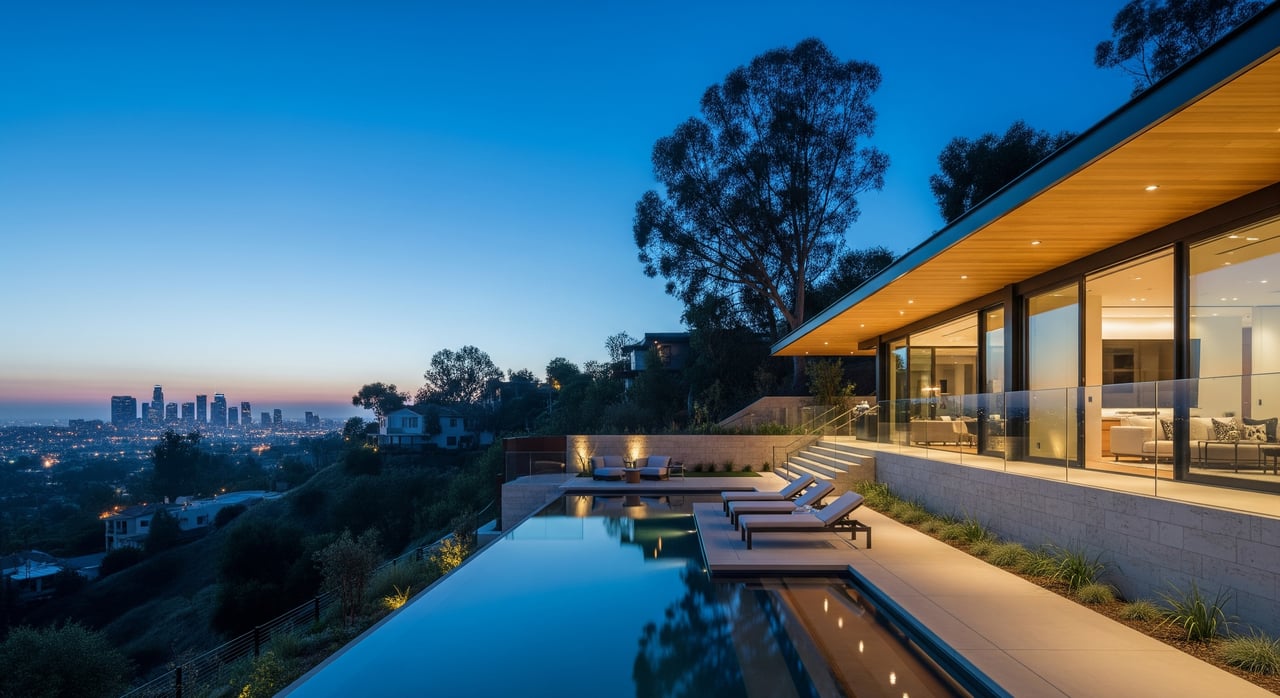
Thinking about a view home in the Hollywood Hills and wondering what you can actually change once you own it? Hillside properties are special, and Los Angeles has rules that shape what and where you can build. If you love the idea of a remodel or a pool with a skyline backdrop, it pays to understand the Baseline Hillside Ordinance before you write an offer. In this guide, you’ll learn what the ordinance covers, how it affects design and grading, what permits and studies you will likely need, realistic timelines, and the smart checks to run up front. Let’s dive in.
What LA’s Baseline Hillside Ordinance means
The Baseline Hillside Ordinance, often called the BHO, sets development rules for properties on steep or visually prominent terrain in the City of Los Angeles. It was created to limit heavy grading, protect natural landforms and views, support slope stability, and reduce visual bulk on hillsides. In plain English, it guides where you can build and how much you can reshape the land.
The BHO applies to parcels the City identifies as hillside or sloped lots. It interacts with other rules and overlays, like zoning designations, Hillside Area provisions, Protected Tree regulations, and special Project Permits or design review. Whether a specific parcel is covered can be checked through the City’s parcel tools and with City Planning.
For you as a buyer, the BHO affects feasibility. It can narrow where an addition can go, limit how much earth you can move, and change how height is measured on a slope. It also influences permit path, engineering scope, and timeline.
How the rules affect what you can change
Building envelopes and siting
Many hillside lots have a defined building envelope. This is the zone on the lot where structures and often certain kinds of grading can occur. Outside that area, natural terrain is meant to stay mostly undisturbed to reduce visibility and erosion.
What it means for you: the usable buildable area may be smaller than it looks from the street. The envelope can control where you place additions, new accessory structures, pools, and major retaining walls. Always ask if a recorded envelope exists and compare it with your concept plan.
Grading limits and earthwork
Hillside rules and Department of Building and Safety grading standards set limits on cut and fill volumes and how you can disturb a slope. The City distinguishes minor grading from larger, major grading that can trigger more reviews, geotechnical scrutiny, and monitoring.
What it means for you: adding a garage into a slope, carving new terraces, or changing a driveway often drives engineering costs and time. Expect needs like a topographic survey, geotechnical report, drainage and erosion control plans, engineered retaining walls, and structural plans.
Height, massing, and visibility
Height in hillside areas is often measured relative to natural grade, not just finished floors. The City also looks at how bulk appears on a slope and may require step-down massing.
What it means for you: a change that seems small from the street can still conflict with height or visibility standards if it raises apparent massing or alters grade.
Protected trees and vegetation
Hillside parcels often include Protected Trees, like native oaks or sycamores. Tree removal can require permits and mitigation or replacement. You will also see fire brush-clearance standards and stormwater controls to limit erosion.
What it means for you: landscape changes that support a remodel must be coordinated with tree protection and fire-safety rules. Plan for separate reviews if trees are involved.
Discretionary review and design approvals
Some hillside projects require discretionary approvals, public notices, or hearings before City Planning bodies. Variances and design review may add conditions or require design changes.
What it means for you: discretionary review can add months. It also increases the chance you will need to refine your design mid-process.
Permits and studies you will likely need
- Zoning and parcel status check
- Use the City’s parcel lookup to confirm zoning, overlays, Hillside designation, and case history. Ask about any recorded covenants or prior approvals.
- Topographic survey
- An accurate topo shows existing grades, spot elevations, trees, utilities, and structures. It is essential for feasibility and permits.
- Geotechnical report
- A soils and engineering study analyzes slope stability, foundation recommendations, drainage, and safe earthwork. It is often required for grading, retaining walls, and major foundations.
- Grading plan and grading permit
- This plan shows cut and fill volumes, slope protection, and drainage. Larger grading can trigger more engineering conditions and on-site monitoring.
- Structural and architectural plans
- Foundations, retaining walls, and hillside framing typically require engineered plans suited to the slope.
- Drainage, hydrology, and erosion control
- Plans document how stormwater will be managed to protect the slope and neighbors.
- Tree evaluation and permits
- If Protected Trees are present, expect separate review and possible replacement planting.
- Fire Department review
- Access, turnarounds, and brush clearance standards can apply.
- Environmental and historic checks
- Ridgelines and special overlays may trigger environmental review.
- Public notice and discretionary approvals
- Some projects require neighborhood notification and hearings.
Timelines you can expect
Every site is different, but here are common ranges so you can plan:
- Initial feasibility, topo, and preliminary consult: 2 to 6 weeks
- Pre-application or pre-check meeting: 2 to 8 weeks to schedule and receive feedback
- Design and engineering: 1 to 4 months, longer if complex
- Plan check at Building and Safety and City Planning: several weeks to a few months for simple permits; multiple months to a year or more for larger or discretionary projects
- Discretionary reviews, variances, or design review: add 3 to 9+ months
- Permit issuance after approvals: weeks to months; large grading may require bonds and staged approvals
- Construction: minor remodels take months; major hillside work or re-grading can run many months to over a year
Cost signals to budget
Every project is unique, but hillside work tends to be more expensive than flat-lot work. Plan for:
- Geotechnical report: often several thousand dollars, depending on borings and lab tests
- Topographic survey: commonly several thousand dollars
- Structural and civil engineering: varies with slope complexity and retaining needs
- Grading and retaining walls: can be a major share of total cost on steep sites
- Architect design fees: higher on hillsides due to complexity
- Permit fees, bonds, and hearing costs: additional and sometimes substantial
- Contingency: allow for unexpected slope remediation discovered during demo or excavation
Buyer checklist before you write an offer
- Ask the seller or listing agent for:
- Any building or grading permits, including retaining wall or septic/sewer work
- Existing plans or surveys and any known building envelope or recorded easements
- Tree protection or removal permits and any condition reports
- Disclosure of prior landslides, slope repairs, or geotechnical remediation
- Order or obtain:
- A current topographic survey and preliminary site walk by a local architect or civil engineer with Hollywood Hills experience
- A zoning review using the City’s parcel lookup to confirm overlays and Hillside status
- A preliminary geotechnical consultation to flag major risks early
- Meet early with professionals:
- Engage a local architect and geotechnical engineer for feasibility input
- Consider a pre-application conversation with Building and Safety or City Planning to identify hurdles
- Evaluate access and logistics:
- Driveway slope and width, room for construction staging, and Fire Department access needs
- Utility access and any street parking restrictions that could affect construction
- Check for neighborhood constraints:
- HOA rules, recorded view easements, or deed restrictions that may add limits beyond City code
Red flags we see often
- No recorded survey and fuzzy lot lines
- No geotechnical history on a steep lot
- Big grade changes or retaining walls with no permits
- A concept that depends on heavy grading to work
- Hidden surprises during demo or excavation, like older utilities or unstable soils
Scenario examples
Modest addition on a gentle slope
You plan to expand a primary suite by a few hundred square feet within the existing envelope and refresh finishes. Expect to confirm zoning, order a topo and geotechnical report, and prepare structural plans that respect height and massing rules. Plan check could be several weeks to a few months if the work stays within limits, with construction taking additional months.
New garage cut into a slope or a pool on a steep lot
You want a street-level garage or a pool terrace with retaining walls. This often needs significant grading permits, a full geotechnical study, engineered retaining systems, and drainage plans. Discretionary review may apply, and you should plan for multiple months to a year or more in approvals, plus many months of construction.
Move forward with clarity
Hillside homes are worth the preparation. If you line up the right team, verify zoning and overlays early, and scope grading and geotechnical needs up front, you can protect your budget and timeline while preserving the views that drew you to the Hollywood Hills.
If you want a clear read on feasibility before you waive contingencies, let’s talk. As a third-generation Angeleno focused on design-forward properties, I can connect you with the right hillside pros and guide your offer strategy. Book a confidential consultation with Michael Fenton.
FAQs
Does the Baseline Hillside Ordinance apply to most Hollywood Hills lots?
- Many parcels in the Hollywood Hills fall within City-defined hillside areas, so you should confirm your parcel’s status through the City’s parcel lookup tools before planning work.
What is a building envelope on a hillside property?
- A building envelope is the defined area on your lot where structures and certain grading are allowed, which protects natural terrain outside that zone.
What is a geotechnical report and why is it required?
- A geotechnical report studies soil and slope conditions to recommend safe foundations, drainage, and earthwork, and it is commonly required for grading and retaining walls.
How long do permits take for hillside remodels in the Hollywood Hills?
- Simple permits can move in several weeks to a few months, while larger or discretionary projects often take multiple months to a year or more before construction begins.
Will adding a pool trigger major grading under the BHO?
- Pools on steep lots often require notable grading, engineered retaining, and drainage plans, which can move the project into a more complex permit path.
Can I remove an oak or sycamore on a Hollywood Hills property?
- Protected Trees may require separate permits and mitigation or replacement, so plan for tree evaluation early in your design.
What should I check before removing contingencies on a hillside home?
- Verify zoning and overlays, get a topo survey, consult a geotechnical engineer, review prior permits, and assess access and staging constraints that could affect construction.