
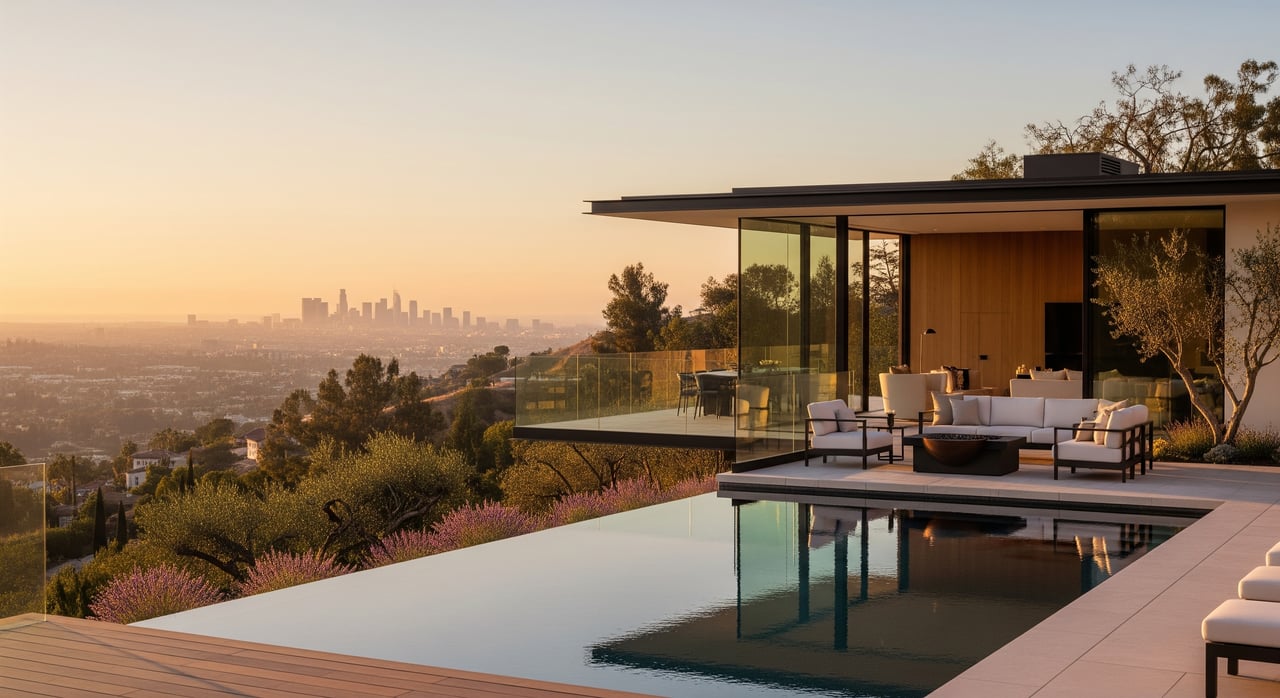
Not all views are created equal. In the Hollywood Hills, the right vista can be the difference between a strong sale and a standout one. If you are wondering how much an ocean horizon, a glittering downtown skyline, or a secluded canyon outlook actually adds to value, you are not alone. Pricing a view premium is part art and part disciplined analysis.
This guide breaks down how buyers think about views, how to account for orientation and privacy, how to weigh powerlines and other obstructions, and a practical framework for selecting and adjusting comps in the Hollywood Hills. You will finish with a clear playbook you can use before you price, list, or negotiate. Let’s dive in.
What buyers pay for in views
A view premium is a bundle of attributes, not a single line item. Buyers respond to quality, location, and how the view lives day to day.
Ocean and marina horizons
West and southwest views toward the Santa Monica Bay are widely considered the most valuable because they are rarer and deliver sunset light. The premium is strongest when the horizon is unobstructed and visible from primary spaces like the living room, kitchen, and main patio. Heat and glare can increase with this exposure, so shading and glazing matter for comfort.
Downtown skyline lights
Vistas across the basin to Downtown Los Angeles attract buyers who value city energy and nighttime sparkle. Clarity and iconicity matter. The premium varies with distance, air quality, and whether the skyline is framed cleanly without visual clutter.
Canyon and greenbelt privacy
Canyon outlooks and greenbelt views into the Santa Monica Mountains are prized for greenery, calm, and privacy. For buyers who want seclusion, these views can be as compelling as skyline or ocean. The most desirable settings feel protected by topography and distance to neighbors.
Panoramic or multi-directional views
Homes with multiple protected vistas, such as ocean plus canyon or skyline, are scarce. When those views are enjoyed from key indoor and outdoor spaces, buyers often ascribe outsized value relative to single-aspect views.
Orientation and daily livability
Orientation shapes how the home feels and functions. West and southwest exposures deliver sunsets and ocean light but can add heat load in the afternoon. North-facing canyon views often offer steady, softer light and less heat. The premium is higher when the view pairs with everyday usability: think kitchen-to-patio flow, a primary suite perched over the outlook, and a pool terrace that faces the vista.
Privacy and future risk
Privacy often rivals the view itself in importance. Buyers pay for distance from neighboring windows, topographic separation, and landscape screening that does not block the outlook. They also discount for risk. If a nearby vacant lot is likely to develop or an approved addition could interrupt the sightline, expect a lower price or tougher negotiations. Public records and permit checks help clarify durability.
Powerlines and visual obstructions
Powerlines, towers, and other foreground intrusions are a common drag on value. The impact depends on size, proximity, and whether the lines cut across the view from primary outdoor areas. Minor neighborhood poles at a distance may have a small effect. Prominent high-tension lines in the foreground typically require a meaningful negative adjustment. Landscaping can soften the visual, but full undergrounding is complex and costly, and feasibility varies by location.
How to price a view premium
Use a stepwise process anchored in recent Hollywood Hills sales. Focus on the last 6 to 12 months when possible.
Step 1: Establish a base value
Select closed sales that closely match your home’s core features but without a significant view. Keep lot size, gross living area, bed/bath count, age, condition, and parking as similar as possible. This creates a baseline before layering in the view.
Step 2: Find view-bearing comparables
Identify sales with views similar to yours in type, quality, and orientation. Confirm through photos and maps that the outlook is experienced from primary spaces. Avoid assuming a listing’s “view” checkbox means the same thing as your home’s vista.
Step 3: Use paired-sale logic
Look for pairs of sales that are substantially similar except for the view. This is the most defensible way to isolate a premium. If two nearly identical homes sold at different prices and the key difference is the view, the residual gap helps quantify the premium.
Step 4: Adjust for non-view differences
Before you isolate the view premium, make itemized adjustments for square footage, condition, remodeling, pools, parking, and lot utility. Keep adjustments consistent with local norms and the most recent sales data.
Step 5: Cross-check with market behavior
Confirm that your estimate aligns with how the market responded. Shorter days on market, multiple offers, or a notable list-to-close spread on view homes can corroborate your range. If the story conflicts, recheck your pairs and adjustments.
Selecting comparables in the Hills
Hollywood Hills micro-markets shift block by block. Use sub-ridgelines and canyons as reference points and stay as close as possible. Prioritize sales where elevation, street type, and driveability feel similar to your subject. Because air quality and haze affect distant vistas, prefer comps with similar atmospheric exposure when possible. If you cannot find a perfect match, build a small set of comps and triangulate a range rather than forcing a single number.
Local constraints that shape value
City hillside development rules and grading limits make large reshaping of terrain uncommon. That can help preserve long-distance views in many parts of the Hills. Conservation, tree protection, and protected ridgelines can also stabilize outlooks. On the flip side, new permits for taller structures or additions can change a view’s future. Utility easements and rights-of-way may affect how and where homes or landscaping can be placed, which ties back to outlook and privacy.
For sellers: pricing and presentation
- Lead with livability. Highlight where the view meets daily life, such as a kitchen-to-terrace connection or a primary suite balcony.
- Time your photography. Sunset can showcase ocean horizons and glow, while evening captures skyline lights. Clear daytime shots help document distance and scope.
- Disclose known plans. Buyers and appraisers will check public records. Transparent disclosure builds trust and reduces renegotiations.
- Address negatives. If powerlines are visible, document distance and mitigation like landscaping or how the lines sit against hills rather than sky.
- Set strategy by supply. If few nearby homes offer a comparable vista, consider testing the high end. If many do, anchor to recent paired sales.
For buyers: diligence and negotiation
- Verify durability. Pull permits and check for active applications on nearby lots that could alter sightlines.
- Confirm usability. Walk the property at different times to see how the view lives in the morning, afternoon, and evening. Check glare, wind, and noise.
- Balance tradeoffs. A dramatic view can come with a steep driveway, stairs, or limited guest parking. Weigh these against daily needs.
- Document disamenities. If powerlines or other obstructions are more impactful than expected, use that to seek credits or price adjustments.
Illustrative examples
The following are hypothetical examples to show how you might think about value. Always validate with recent, local closed sales.
- Ocean premium example (hypothetical): A 2,400 sf non-view home sells for $2,200,000. A similar 2,400 sf home with an ocean view visible only from a secondary space sells for $2,350,000 after normal adjustments. A superior subject with an unobstructed ocean horizon from the main living room and patio could reasonably support a higher premium within that neighborhood’s range.
- Skyline vs canyon tradeoff (hypothetical): A home with crisp downtown views sells quickly at the upper end due to night appeal. A similar home with a secluded canyon outlook sells for a similar or slightly lower price, reflecting a different buyer pool that values privacy over lights.
- Powerline impact (hypothetical): A near-match home with high-tension lines in the foreground sells materially lower than non-lined comps. Sellers with visible lines should expect to price-in mitigation or accept a discount.
Documentation that supports appraisal
Appraisers look for objective evidence. Photograph the view from primary rooms and outdoor areas. Include a simple sketch of orientation and label which rooms face which vista. A map showing sightlines and neighboring lots helps explain durability. If the listing drew multiple offers, note that market response. When appropriate, aerial or drone photos can document the continuity of the outlook.
Bringing it together
Pricing view premiums in the Hollywood Hills is about disciplined comparison and clear storytelling. Separate what the view is, where it is enjoyed, and how secure it is from what the home would be worth without it. Then use local, recent paired sales to support your range and the market’s response to refine it. Whether you are listing or making an offer, that framework helps you price with confidence.
If you are weighing the value of an ocean, skyline, or canyon outlook and want a confidential, data-backed read on your home or a home you are pursuing, connect with Michael Fenton for boutique, advisor-led guidance.
FAQs
What is a view premium in the Hollywood Hills?
- It is the additional value buyers assign to a home because of its outlook, based on view type, quality, orientation, privacy, and how the view lives from primary spaces.
Are ocean views always worth more than skyline views?
- Ocean horizons are often the highest-value vista due to rarity and sunsets, but downtown skyline views can command strong premiums depending on clarity, distance, and nighttime appeal.
How do powerlines affect value in view homes?
- Visible lines typically require a negative adjustment that grows with size and proximity, especially if they cut across the view from main outdoor or living areas.
How should I pick comps for a Hollywood Hills view home?
- Stay within the same sub-ridgeline or canyon, use sales from the last 6 to 12 months, confirm view quality from photos, and prioritize paired sales where the view is the main difference.
Will an appraiser recognize my home’s view premium?
- Yes, when supported by market evidence. Provide paired sales, photos from primary spaces, orientation sketches, and any proof of strong buyer demand such as multiple offers.