
If you are drawn to neighborhoods with both personality and provenance, Silver Lake tends to stand out fast. It offers a rare mix of reservoir views, creative energy, and homes that feel collected over time rather than built from a single mold. If you are exploring where design, daily convenience, and a strong sense of place come together in Los Angeles, this guide will help you understand what makes Silver Lake distinct. Let’s dive in.
Why Silver Lake Feels Different
Silver Lake is centered around its reservoir and shaped by its hills, which gives the neighborhood a character that feels both urban and calm. City planning materials describe it as one of Los Angeles’s original open-reservoir communities, with a balance of urban amenities and rustic tranquility.
That balance is a big part of the appeal. You can feel the neighborhood’s energy along its active commercial streets, then shift quickly into quieter residential pockets with views, stairways, and hillside streets that feel tucked away.
Silver Lake also carries a long-standing creative reputation. Current local coverage often points to its art and music culture, eclectic boutiques and bars, stylish dining scene, and a bohemian history that still shapes the neighborhood’s identity today.
Where Daily Life Happens
For many residents, everyday life in Silver Lake revolves around a few clear anchors. The reservoir, Sunset Junction, and the main neighborhood corridors create a rhythm that makes the area feel active without losing its local scale.
Reservoir Loop and Park Space
The Silver Lake Reservoir is the neighborhood’s defining outdoor feature. The walking route around the reservoir is just over 2 miles, and it connects with Silver Lake Meadow, the recreation center, and the adjacent dog park.
The City of Los Angeles says the reservoir complex has been removed from the drinking-water system and is being repurposed as a passive public park within a planned 116-acre park system. That helps explain why outdoor access feels so central to life here.
The nearby off-leash dog park is a 1.25-acre city facility, which adds to the reservoir area’s role as an everyday gathering point. Whether you are walking, exercising, or simply looking for open space, this part of Silver Lake carries a lot of the neighborhood’s daily activity.
Sunset Junction and Main Corridors
Sunset Junction is often considered the neighborhood’s closest thing to a walkable center. It developed in the 1920s and 1930s at the intersection of two streetcar lines, and that history still shows in the area’s compact, mixed-use feel.
Today, Sunset Boulevard and Silver Lake Boulevard carry much of the neighborhood’s daily movement. These corridors connect local shops, dining, services, and gathering spots in a way that makes Silver Lake feel neighborhood-scaled rather than purely residential.
Shops, Cafes, and Local Routine
Silver Lake’s daily rhythm is shaped by independent businesses and long-running neighborhood institutions. City survey material identifies Millie’s Coffee Shop as a neighborhood institution dating to 1926, while current neighborhood coverage highlights places like Silverlake Wine, Blair’s, and El Caserio as part of the area’s curated retail and dining mix.
The Silver Lake Farmers Market at Griffith Park Boulevard and Sunset adds another regular point of connection. It brings together produce, snacks, vintage goods, and household miscellany, reinforcing the neighborhood’s strong third-place culture.
How the Hills Shape the Experience
Silver Lake is not flat, and that matters more than many first-time buyers expect. The neighborhood can feel very walkable in certain pockets, but its hillside topography creates a very different experience from block to block.
City historic survey work recorded more than 60 public stairways in the broader Silver Lake, Echo Park, and Elysian Valley survey area. These stairways were designed to help pedestrians move between streets at different elevations, and they remain part of the neighborhood’s physical identity.
For you as a buyer, this means Silver Lake offers a layered streetscape. Some homes sit close to commercial activity, while others feel elevated, view-oriented, and more private. It is worth understanding how a property connects to the street, nearby amenities, and the hillside itself.
What Kinds of Homes You’ll Find
One of Silver Lake’s biggest strengths is that its housing stock is genuinely varied. Instead of repeating one architectural style or development pattern, the neighborhood reads as a patchwork of homes and smaller multifamily buildings built over several decades.
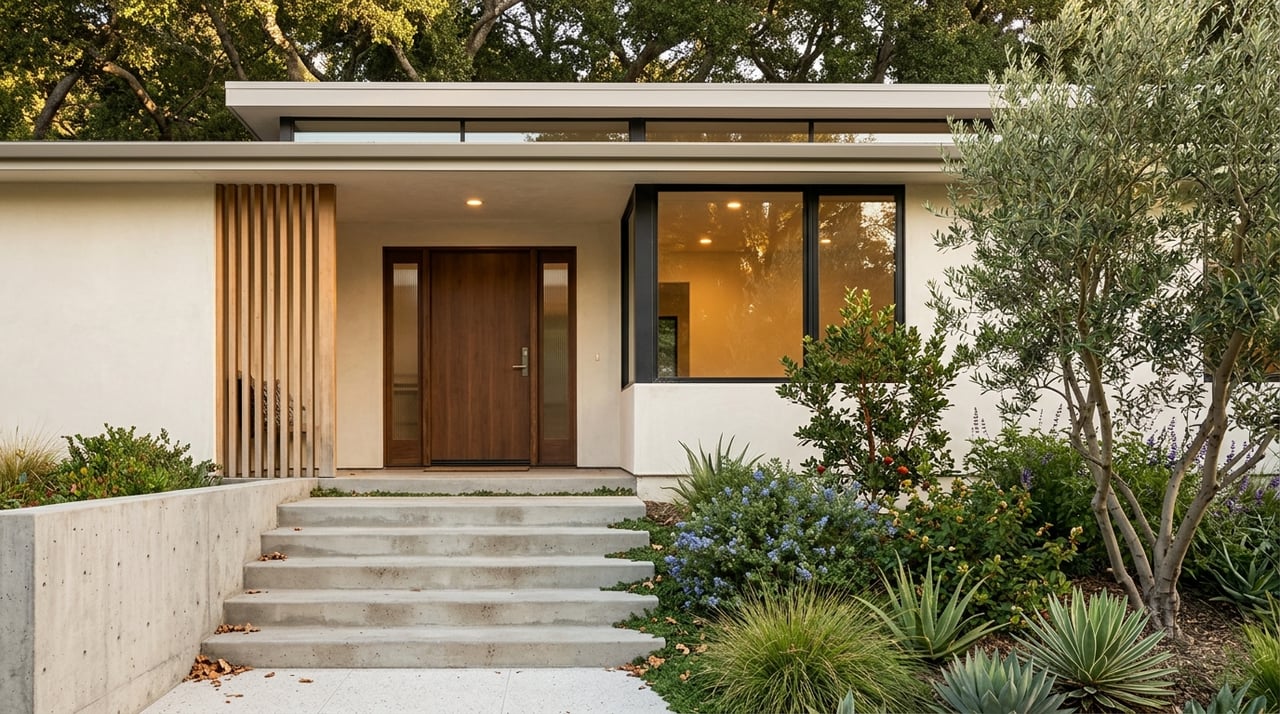
City survey work says the Silver Lake Residential Historic District developed in phases from the 1920s through the 1960s. It is especially strong in Period Revival and Mid-Century Modern architecture, which helps explain why the neighborhood attracts buyers who care about design.
Across the broader survey area, officials recorded 15 bungalow courts, along with courtyard apartments and a mix of single-family and multifamily properties. The dominant residential forms are one- and two-story single-family homes, with some duplexes and triplexes mixed in.
That variety gives Silver Lake much of its visual and cultural appeal. On a short drive or walk, you may encounter hillside homes, modest bungalows, small apartment buildings, and architecturally notable residences that feel highly individual.
Silver Lake’s Design Legacy
Silver Lake’s reputation goes beyond style alone. It has real architectural significance within Los Angeles, especially for buyers who appreciate modern design and the evolution of residential architecture.
Official planning materials note that homes here were often oriented toward reservoir views. The surrounding area also became a showcase for work by Richard Neutra, Rudolf Schindler, and Gregory Ain, all of whom helped shape Los Angeles’s design history.
The LA Conservancy identifies several notable properties tied to Silver Lake’s design legacy, including the Maltman Bungalows, VDL Research House II, Lautner House, Bubeshko Apartments, Avenel Cooperative Housing, and Silvertop. Together, these landmarks help explain why Silver Lake continues to attract design-minded buyers looking for homes with character and provenance.
Why Buyers Are Drawn Here
For many buyers, Silver Lake offers a rare overlap of architecture, outdoor access, and neighborhood life. It feels localized and expressive, but still practical enough for everyday routines.
You are not choosing between atmosphere and livability here. The appeal comes from how the neighborhood layers both. You can have reservoir access, coffee shops, local retail, and a housing stock that ranges from prewar bungalows to iconic modernism.
That also means the search process can be more nuanced. Two homes at similar price points may offer very different experiences depending on their architecture, lot orientation, elevation, and proximity to the neighborhood’s most active areas.
What to Notice When Touring Silver Lake Homes
If you are considering a move into Silver Lake, it helps to look past square footage alone. In a neighborhood like this, the setting and architectural context often matter just as much as the floor plan.
Pay close attention to:
- Street approach: Hillside positioning, stair access, and how the home meets the street can shape daily use.
- Views and orientation: Many homes take advantage of reservoir or hillside outlooks.
- Architectural integrity: Original design details may add character and long-term appeal.
- Property type: Single-family homes, duplexes, triplexes, bungalow courts, and courtyard-style buildings each offer a different lifestyle.
- Proximity to activity: Some buyers want easy access to Sunset Junction and the reservoir loop, while others prefer quieter residential pockets.
In Silver Lake, the right fit often comes down to how you want to live as much as what you want to own.
Why Local Guidance Matters
Silver Lake is one of those neighborhoods where context changes everything. The same block can present a very different feel from the next, and the housing stock is diverse enough that broad assumptions rarely tell the full story.
For design-minded buyers in particular, it helps to work with someone who understands how architecture, setting, and neighborhood rhythm intersect. A thoughtful search is not just about finding a home in Silver Lake. It is about identifying the version of Silver Lake that best matches your priorities.
If you are considering a move to Silver Lake or looking for a design-led home with lasting character, Michael Fenton offers a polished, discreet approach grounded in Los Angeles market knowledge and architecturally informed guidance.
FAQs
What is Silver Lake known for in Los Angeles?
- Silver Lake is known for its reservoir-centered setting, creative culture, eclectic shops and dining, hillside streets, and a housing mix that includes bungalows, small multifamily buildings, and architecturally significant modern homes.
What types of homes are common in Silver Lake?
- Silver Lake includes mostly one- and two-story single-family homes, along with bungalow courts, courtyard apartments, duplexes, triplexes, and small apartment buildings.
Where does daily life happen in Silver Lake?
- Much of daily life happens around the Silver Lake Reservoir loop, Sunset Junction, Sunset Boulevard, Silver Lake Boulevard, local cafes and shops, and the Silver Lake Farmers Market.
What makes Silver Lake architecture stand out?
- Silver Lake stands out for its mix of Period Revival and Mid-Century Modern homes, along with landmark works associated with architects like Richard Neutra, Rudolf Schindler, Gregory Ain, and John Lautner.
Is Silver Lake a walkable neighborhood?
- Silver Lake is walkable in many pockets, especially near Sunset Junction and the reservoir, but the neighborhood’s hills and public stairways mean walkability can vary significantly from one area to another.